
How to Find a Job After College: Practical Strategies for New Graduates
Learn how to find jobs after college, where to search for entry-level roles, and what strategies help graduates get hired faster.
Graduating from college is an exciting milestone, but it also brings an important challenge: finding your first professional job. Many graduates feel uncertain about where to start, what roles to apply for, and how to stand out among other candidates.
Employers often look for candidates who demonstrate motivation, communication skills, and the ability to learn quickly. Even if you have limited professional experience, there are many opportunities available for graduates entering the workforce.
This guide explains how to approach the search for jobs after college, what strategies help new graduates get hired, and how to build a successful job search plan.
Why Finding a Job After College Can Be Challenging
Many graduates expect that a college degree will immediately open the door to professional opportunities. However, the transition from education to employment often takes time.
Several factors can make the search for jobs after college more difficult:
- High competition among recent graduates.
- Employers requesting practical experience.
- Uncertainty about which career path to pursue.
- Lack of professional networks.
Understanding these challenges helps graduates approach the job search with realistic expectations and better preparation.
Types of Jobs Graduates Should Look For
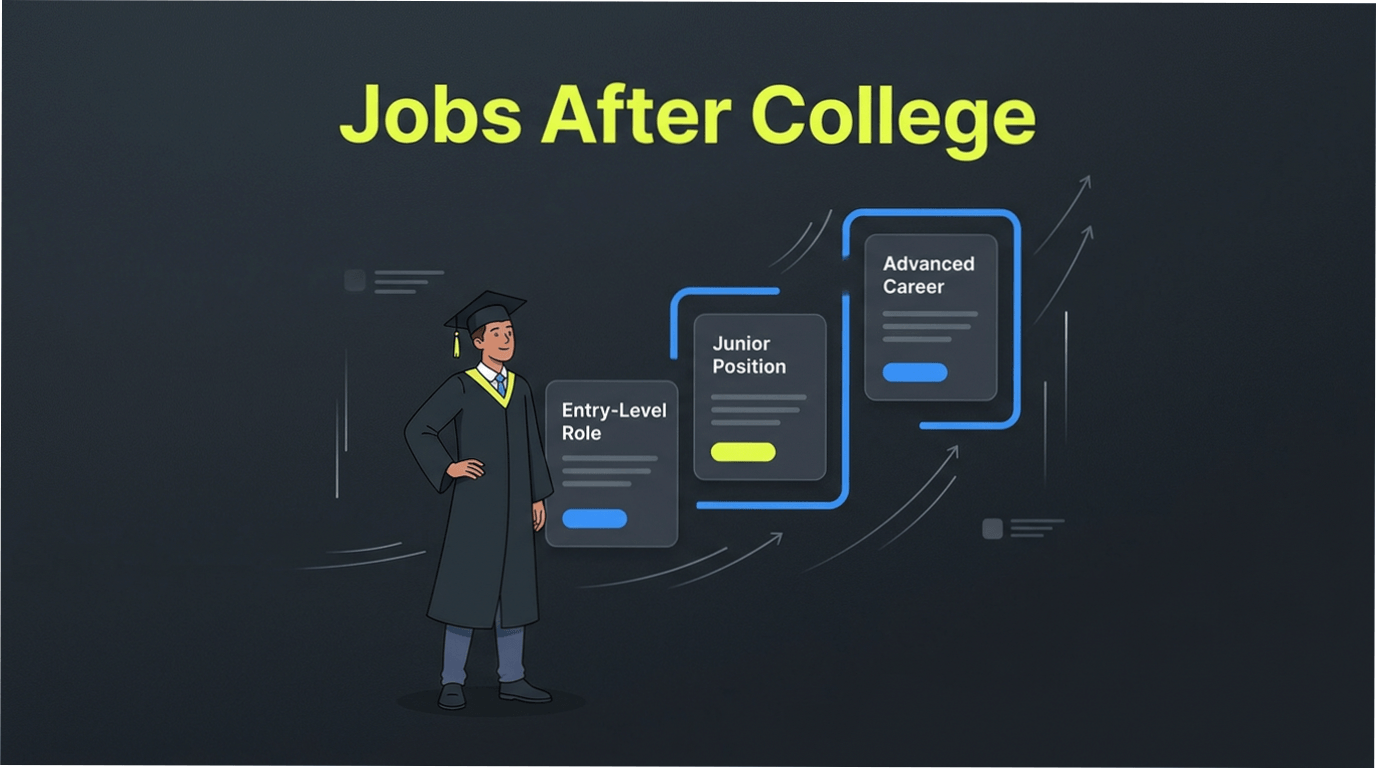
Most graduates begin their careers in entry-level roles designed for candidates who are new to the workforce.
Common starting positions include:
- Junior marketing roles
- Administrative assistants
- Customer success representatives
- Sales development representatives
- Data analysts or junior analysts
These positions allow graduates to gain practical experience, develop professional skills, and grow within a company.
How to Start Your Job Search After Graduation
One of the most effective ways to find jobs after college is to combine several job search strategies.
Search structured job platforms
Job platforms provide access to thousands of openings and help graduates identify entry-level opportunities. You can browse current listings on the jobs category page to see positions that employers are currently hiring for.
Use your university network
Many universities have career services, alumni networks, and job boards that connect graduates with employers.
Attend networking events
Professional meetups, career fairs, and online networking events can introduce you to employers and recruiters.
Apply consistently
Successful job searches often require sending multiple applications and following up with employers.
How to Build a Resume as a Graduate
Graduates often worry that they do not have enough experience for a professional resume. However, employers understand that new graduates are still developing their careers.
Your resume should highlight:
- Education and academic achievements
- Internships
- Volunteer work
- Relevant projects
- Technical and soft skills
These elements help employers understand your potential and readiness for entry-level roles.
Common Mistakes Graduates Make
Many new graduates unknowingly make mistakes that slow down their job search.
- Applying to jobs without reading the full description.
- Sending the same resume to every employer.
- Waiting too long before starting the job search.
- Focusing only on one type of role.
Avoiding these mistakes can significantly improve your chances of finding jobs after college.
Tips to Increase Your Chances of Getting Hired
- Tailor your resume to each job application.
- Build a professional LinkedIn profile.
- Prepare for interviews before applying.
- Develop additional skills through short courses.
- Stay consistent and apply regularly.
Exploring job opportunities on reliable platforms like GetJob can also help graduates identify companies actively hiring entry-level candidates.
Building Your Career After the First Job
Your first job after graduation is only the beginning of your professional journey. Entry-level positions allow you to gain experience, develop industry knowledge, and build a professional network.
With time, these experiences open doors to higher-level roles and long-term career growth.
Author
Daniel Carter
Career technology researcher specializing in recruitment platforms, applicant tracking systems, and job search optimization.
This guide is based on recruiter insights, hiring platform documentation, and research into graduate job search behavior.