
How to Write a Resume for Your First Job: A Beginner-Friendly Guide
Learn how to write a resume for your first job, what to include without experience, and how to create a resume that employers notice.
Writing your first resume can feel confusing, especially if you have never worked in a professional role before. Many first-time job seekers believe that employers only care about work experience, but that is not always true.
Companies hiring entry-level candidates often look for potential, motivation, and transferable skills. A well-structured resume for your first job helps employers quickly understand your abilities and determine whether you could be a good fit for the role.
This guide explains how to write a strong resume for your first job, what sections to include, and how to present your skills even if you have little or no work experience.
Why a Resume Matters for Your First Job
Even for entry-level roles, employers typically require a resume before inviting candidates for interviews. A resume gives hiring managers a quick overview of your background, education, and abilities.
For beginner candidates, the goal of a resume is not to show years of experience but to highlight potential, responsibility, and willingness to learn.
A clear and organized resume for your first job helps you stand out among other applicants who may also be applying for their first professional opportunity.
Basic Structure of a First Job Resume
A beginner resume should be simple, clear, and easy to read. Avoid complicated layouts and focus on the most important information employers want to see.
Most resumes for first-time job seekers include the following sections:
- Contact information
- Resume objective
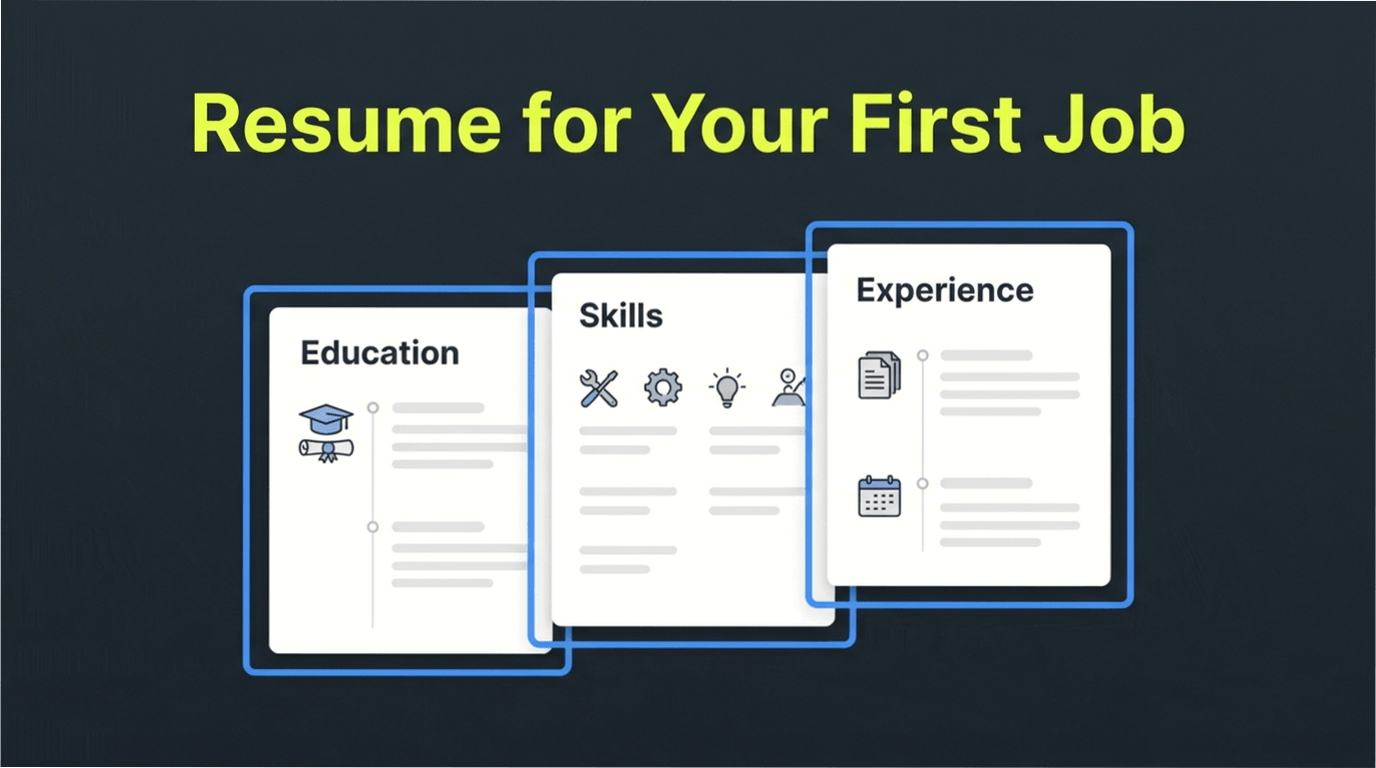
- Education
- Skills
- Projects, internships, or volunteer experience
- Additional activities
These sections help employers evaluate your potential even if you have not worked in a full-time role yet.
Contact Information
Start your resume with clear contact details so employers can easily reach you.
Include the following:
- Your full name
- Email address
- Phone number
- City and state (optional)
Make sure your email address looks professional. Avoid nicknames or informal usernames.
Resume Objective
A resume objective is a short introduction that explains what type of role you are looking for and what you can offer an employer.
Example:
Motivated recent graduate seeking an entry-level position where I can apply strong communication skills and develop professional experience in a fast-growing company.
This short section helps personalize your resume for your first job and gives employers context about your career goals.
Education Section
For first-time job seekers, education is often the most important part of the resume.
Include:
- School or university name
- Degree or program
- Graduation year
- Relevant coursework or achievements (optional)
If you recently graduated, this section should appear near the top of your resume.
Skills Section
Employers hiring entry-level candidates often focus heavily on skills. Even without work experience, you likely developed useful abilities during school, projects, or extracurricular activities.
Common skills employers value include:
- Communication
- Teamwork
- Problem solving
- Time management
- Basic computer skills
Highlighting these abilities strengthens your resume for your first job and shows employers you are ready to contribute.
Projects, Internships, and Volunteer Experience
Even if you have never worked in a traditional job, other experiences can demonstrate initiative and responsibility.
You can include:
- School projects
- Internships
- Volunteer work
- Student organizations
- Freelance or personal projects
These experiences show employers that you can complete tasks, collaborate with others, and work toward goals.
Common Resume Mistakes to Avoid
Many beginner candidates accidentally make mistakes that reduce their chances of getting interviews.
- Using complicated designs or graphics.
- Writing long paragraphs instead of clear bullet points.
- Including irrelevant personal information.
- Sending the same resume to every employer.
Keeping your resume clean, structured, and relevant to the role can significantly improve your chances of getting noticed.
Where to Find Opportunities for Your First Job
Once your resume is ready, the next step is applying for entry-level roles.
Browsing structured job listings can help you understand employer expectations and identify roles suitable for beginners. You can explore available positions across different industries on the jobs category page.
You can also explore additional opportunities and resources directly on GetJob, where job listings are organized to help candidates quickly understand job requirements and apply more efficiently.
Starting Your Career
Your first job does not need to be perfect. The goal is to gain experience, build professional skills, and start developing your career path.
A strong resume for your first job can help you secure interviews and open the door to valuable opportunities that support long-term professional growth.
Author
Daniel Carter
Career technology researcher specializing in recruitment platforms, applicant tracking systems, and job search optimization.
This guide is based on recruiter insights, hiring platform documentation, and research into entry-level hiring trends.