
Resume Keywords Explained: How to Beat ATS Filters and Get More Interviews
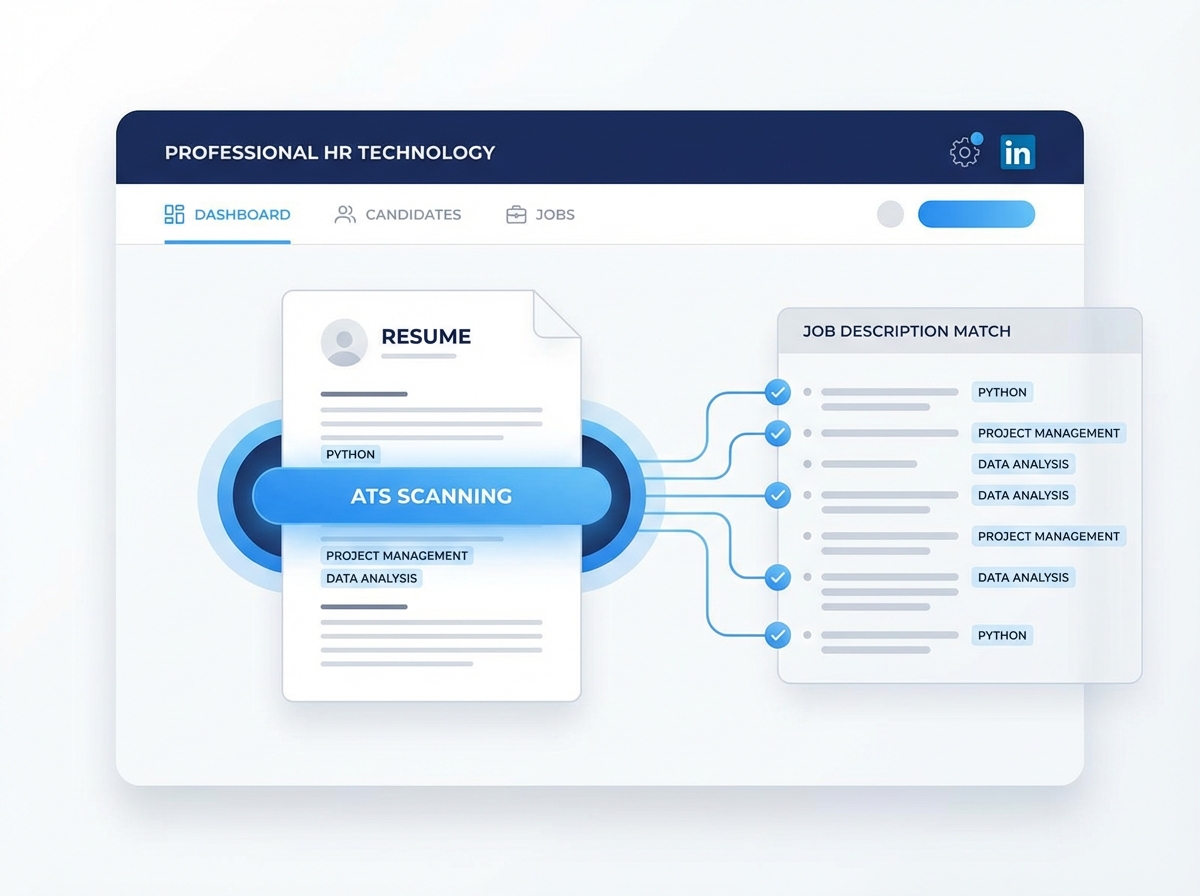
Many job seekers send dozens of applications but never hear back from employers. In many cases, the issue is not experience or qualifications but how a resume interacts with automated hiring systems.
Today, most companies rely on applicant tracking systems (ATS) to filter candidates before a recruiter even sees a resume. If the document does not contain the right resume keywords, the system may automatically reject it.
Studies of modern hiring pipelines show that over 90% of medium and large companies use ATS software to screen applicants. That means a resume must pass automated filters before it reaches a human recruiter.
Understanding how ATS keywords work and how resumes are evaluated can dramatically increase your chances of getting interviews. This guide explains how resume keywords function, why ATS filters reject resumes, and how to optimize your resume to pass automated screening systems.
What Resume Keywords and ATS Systems Do
Resume keywords are specific words and phrases that applicant tracking systems use to identify relevant candidates. These keywords typically describe required skills, technologies, job titles, certifications, and responsibilities.
Large companies may receive hundreds or even thousands of applications for a single role. Recruiters cannot manually review every resume, so companies rely on ATS software to scan and rank candidates automatically.
An applicant tracking system usually performs several functions.
Resume parsing. The system extracts structured information from a resume such as name, work experience, education, and skills.
Keyword matching. The ATS compares the resume content with keywords from the job description.
Candidate ranking. Applicants are ranked based on how closely their resumes match the required qualifications.
Filtering. Candidates with insufficient keyword matches may never appear in the recruiter’s shortlist.
Modern ATS platforms used by employers include systems such as Workday, Greenhouse, Lever, Taleo, and iCIMS. These platforms automatically analyze resumes and compare them with job requirements.
Because of this automation, a resume may be rejected before any human review if it does not contain the right resume keywords or if the formatting prevents the system from reading the document correctly.
Why Resume Keyword Failures Happen
Several common issues cause resumes to fail ATS keyword screening.
Generic resumes. Many candidates send the same resume to dozens of companies without adapting it to each job description. Recruiters often report that a large percentage of resumes they receive are generic and not tailored to the role.
Missing technical terminology. Candidates sometimes describe their experience informally instead of using industry-standard terms. For example, writing “worked with spreadsheets” instead of “Excel data analysis.”
Keyword mismatch. Job descriptions may use specific phrases such as “project management,” “data visualization,” or “customer acquisition.” If a resume uses completely different wording, the ATS may not recognize the match.
Creative formatting. Infographic resumes, tables, and complex layouts often break ATS parsing and cause important ATS keywords to be ignored.
Keyword stuffing. Some candidates try to manipulate ATS systems by repeating keywords excessively. Modern systems can detect unnatural repetition and may downgrade such resumes.
Outdated terminology. Using outdated job titles or technologies can reduce keyword relevance if employers use newer terminology in job listings.
Common Failure Symptoms
Several signs indicate that a resume may be failing ATS keyword screening.
No responses after many applications. Candidates send dozens of applications but receive no interview invitations.
Instant rejection emails. Automated rejection messages appear shortly after submitting an application.
Applications remain inactive. Some job platforms show that the application was not advanced to the next stage.
Recruiters never contact you. Even when qualifications match the role, recruiters may never reach out.
Low response rate compared to peers. Candidates with similar experience receive more interviews because their resumes contain the expected resume keywords.
Diagnostic Steps
There are several practical ways to determine whether your resume is optimized for ATS systems.
Step 1 — Compare your resume with the job description.
Start by carefully analyzing the job listing. Most job descriptions contain clear skill requirements, tools, and responsibilities. These elements often represent the ATS keywords used for filtering candidates.
Example. If a job listing includes Digital marketing, Google Analytics, SEO strategy, and Content marketing, your resume should naturally include those same terms if they reflect your experience.
Step 2 — Use ATS resume scanning tools.
Several tools simulate how applicant tracking systems evaluate resumes and highlight missing keywords.
Examples include Jobscan, Resume Worded, and SkillSyncer. These tools compare your resume with a job description and show which resume keywords should be added.
Step 3 — Review resume formatting.
ATS-friendly resumes usually follow simple formatting rules: single-column layout, standard fonts, no graphics or images, and clear section headings.
Step 4 — Verify your skills section.
Your resume should contain a clearly labeled skills section including relevant technical and professional keywords.
Step 5 — Use compatible file formats.
Most ATS systems work best with DOCX files or simple text-based PDFs.
Resume Optimization Options
There are several ways candidates attempt to improve resume keyword performance.
Manual resume optimization.
Cost: free.
Difficulty: medium.
Advantages: full control over wording and customization.
Disadvantages: time-consuming. Each job description must be analyzed manually to extract relevant resume keywords.
ATS resume scanning tools.
Cost: typically $10–$40 per month depending on the service.
Difficulty: low.
Advantages: automated keyword suggestions and resume scoring.
Disadvantages: candidates still need to manually search for jobs and adjust resumes individually.
Structured job platforms.
Cost: usually free for candidates.
Difficulty: low.
Advantages: some job platforms structure listings so candidates can easily identify required skills, tools, and responsibilities. This helps job seekers quickly understand which ATS keywords employers expect.
Common Mistakes
Using infographic resumes. Images containing text are often unreadable for ATS software.
Ignoring job description wording. If the job description uses specific terminology, the resume should reflect similar wording.
Using too many abbreviations. When possible, include both the full term and abbreviation. Example: Search Engine Optimization (SEO).
Complex formatting. Multiple columns, text boxes, and graphics can break ATS parsing.
Excessive keyword repetition. Overusing the same phrase may make the resume look unnatural and reduce its effectiveness.
Prevention Tips
Customize your resume for each job application.
Extract relevant resume keywords directly from job descriptions.
Maintain a clean and ATS-friendly resume layout.
Update your skills regularly to reflect current technologies and tools.
Apply through platforms that clearly structure job listings around required qualifications.
Using job platforms that highlight required skills and technologies can help candidates quickly identify the ATS keywords employers expect and adapt their resumes more efficiently.
How Job Platforms Can Help Identify Resume Keywords
One of the biggest challenges in optimizing a resume is identifying the exact keywords recruiters are searching for.
Many traditional job listings contain long descriptions that make it difficult to quickly identify the most important qualifications. Candidates often spend significant time analyzing job descriptions before understanding what skills are actually required.
Modern job platforms increasingly structure job listings to highlight skills, technologies, and responsibilities more clearly.
Platforms such as GetJob organize job listings in a structured format so candidates can quickly identify the most relevant requirements for a role. Instead of scanning long descriptions, job seekers can immediately see which qualifications and resume keywords are expected.
This approach helps candidates identify the most common keywords used by employers, understand role requirements faster, and adapt resumes more efficiently for multiple job applications.
For candidates applying to many jobs, structured listings can significantly reduce the time needed to tailor resumes while improving the chances of passing ATS filters.