
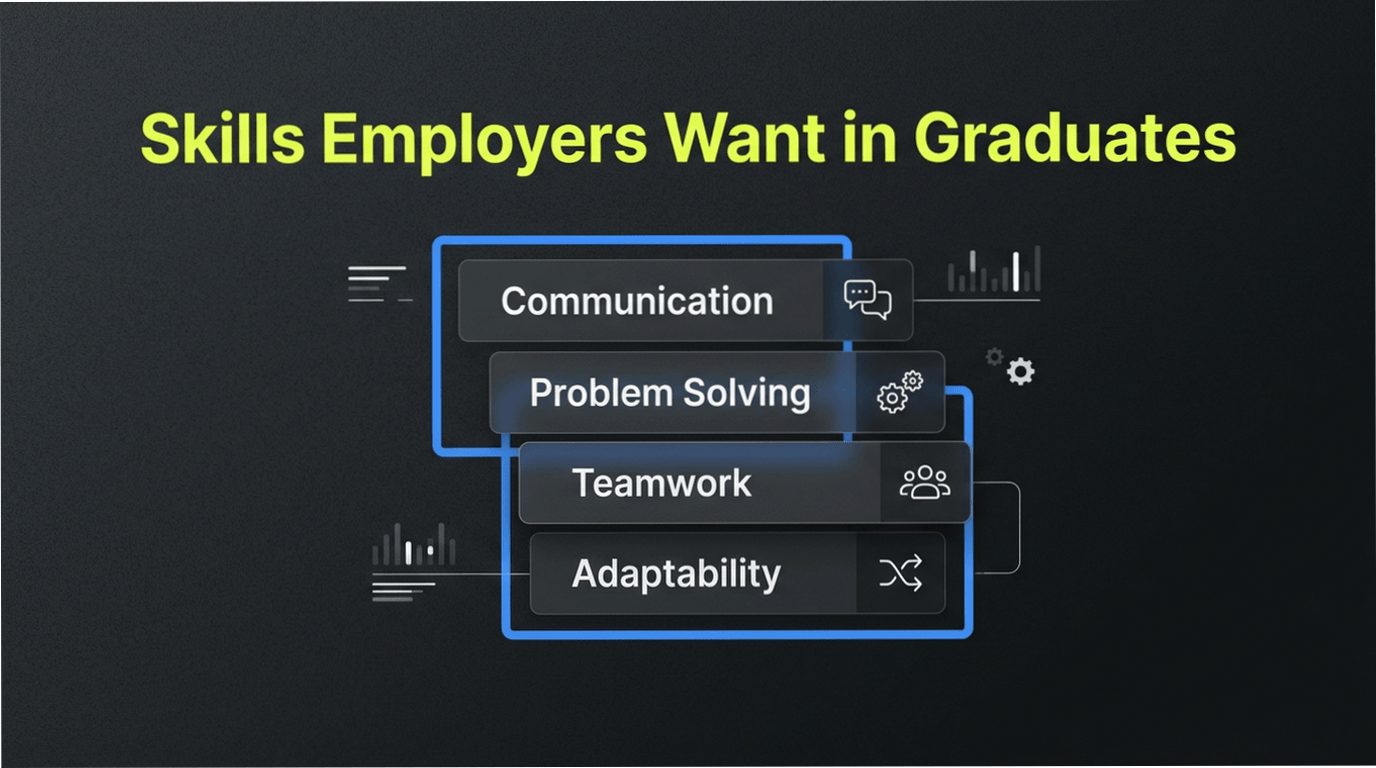
What Employers Look for in Recent Graduates: Skills Employers Want in Graduates
Discover the most important skills employers want in graduates and how recent graduates can prepare for entry-level jobs.
For many students, graduation marks the beginning of an exciting transition from education to professional life. However, one of the biggest questions graduates face is what employers actually expect when hiring entry-level candidates.
While academic knowledge is important, most companies evaluate candidates based on practical abilities, communication, and the ability to adapt to real work environments. Understanding the skills employers want in graduates can significantly improve your chances of getting hired.
This guide explains what employers look for in recent graduates, why these skills matter in the workplace, and how graduates can develop them while searching for their first professional role.
Why Employers Focus on Skills Instead of Experience
Many companies understand that recent graduates may not yet have extensive professional experience. Instead of expecting a long employment history, employers focus on qualities that indicate long-term potential.
Recruiters often evaluate whether candidates demonstrate motivation, responsibility, and the ability to learn quickly. These characteristics suggest that a graduate will adapt well to a professional environment and grow within the organization.
Because of this approach, understanding the skills employers want in graduates becomes more important than simply listing academic achievements.
Communication Skills
Communication is one of the most important skills employers expect from graduates entering the workforce.
Employees must be able to clearly explain ideas, ask questions, and collaborate with coworkers. Strong communication helps teams work more efficiently and prevents misunderstandings in daily operations.
Graduates can demonstrate communication skills through presentations, group projects, internships, or volunteer activities.
Problem-Solving Ability
Another important factor employers consider is how well a candidate can approach and solve problems.
Companies value employees who can analyze situations, identify possible solutions, and make thoughtful decisions. Even entry-level employees are expected to think critically when facing challenges.
Examples of problem-solving skills may come from academic projects, internships, or leadership roles during university studies.
Adaptability and Willingness to Learn
Work environments change quickly, especially in modern digital industries. Employers want graduates who are open to learning new tools, systems, and processes.
Adaptability shows that a candidate can grow with the company and adjust to evolving responsibilities. This is one of the most valuable skills employers want in graduates today.
Graduates who actively develop new skills through courses, certifications, or personal projects often stand out during the hiring process.
Teamwork and Collaboration
Most modern workplaces rely heavily on teamwork. Employees are expected to collaborate across departments, share information, and support common goals.
Graduates who demonstrate teamwork experience through academic group projects, volunteer work, or student organizations often make stronger candidates for entry-level roles.
Employers want to see that candidates can cooperate effectively with others and contribute positively to a team environment.
Time Management and Organization
Entry-level employees often handle multiple tasks at once. Time management helps ensure that responsibilities are completed efficiently and deadlines are met.
Graduates who balance academic work, extracurricular activities, or part-time jobs usually develop strong organizational skills that are valuable in the workplace.
Digital and Technical Skills
In many industries, basic technical knowledge is now expected even for entry-level roles. This may include familiarity with productivity software, communication tools, and industry-specific platforms.
Employers often value graduates who are comfortable using digital tools and learning new technologies quickly. These technical abilities complement the broader skills employers want in graduates.
How Graduates Can Develop These Skills
Although some skills develop naturally during education, graduates can strengthen their professional profile through additional activities.
- Participating in internships or volunteer work.
- Completing online courses and certifications.
- Working on personal or academic projects.
- Joining student organizations or professional communities.
- Practicing interview and communication skills.
Developing these experiences helps graduates demonstrate practical abilities when applying for entry-level roles.
Where to Find Entry-Level Opportunities
Understanding the skills employers want in graduates is only part of the process. Graduates also need access to reliable job opportunities where these skills can be applied.
Structured job platforms help candidates identify entry-level roles and understand employer expectations before applying. You can explore current openings on the job listings page to see positions available across different industries.
Exploring opportunities on platforms like GetJob also allows graduates to discover companies actively hiring entry-level candidates and preparing to start their careers.
Building a Strong Career Foundation
Your first professional role does not need to be perfect. Entry-level positions are designed to help graduates gain experience, develop skills, and understand how different industries operate.
By focusing on the skills employers want in graduates, candidates can build a strong foundation that supports long-term career growth and professional development.
Author
Daniel Carter
Career technology researcher specializing in recruitment platforms, applicant tracking systems, and job search optimization.
This guide is based on recruiter insights, hiring platform documentation, and research into graduate hiring trends.