
Why Your Job Applications Get No Response: Real Reasons Explained
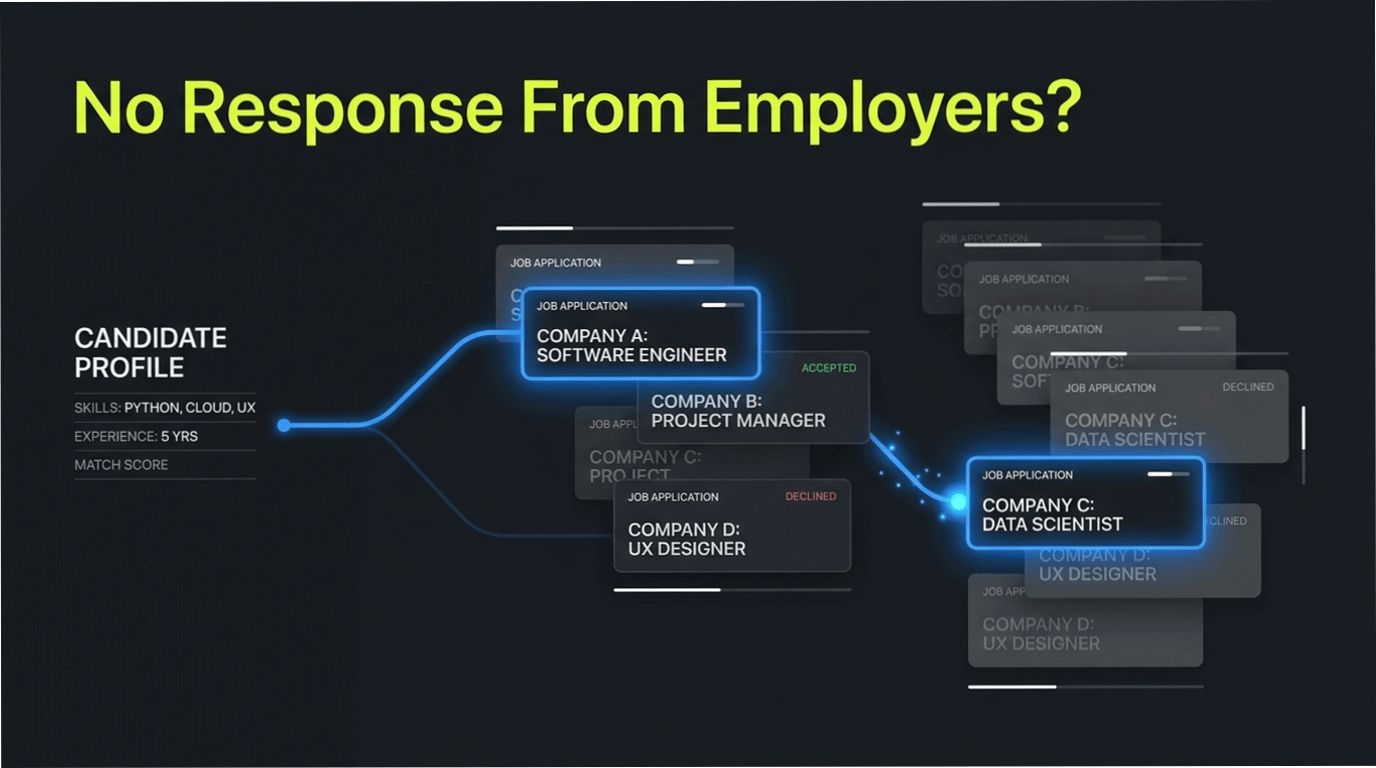
Learn why employers don’t respond to applications and how to fix common mistakes that reduce your chances of getting interviews.
Many job seekers apply to dozens of positions but never hear back from employers. This is one of the most frustrating parts of the job search process.
In most cases, the issue is not a lack of skills. The real problem is how candidates apply, what jobs they choose, and how well their profile matches employer expectations.
Understanding why applications fail is the first step to improving results and getting more interview invitations.
Applying to the Wrong Jobs
One of the most common reasons candidates receive no response is applying to roles that are not a good match.
If your experience, skills, or level do not align with the job requirements, your application is unlikely to move forward.
If you are unsure how to identify relevant roles, start by reading this guide on how to find jobs that match your skills , which explains how to avoid this mistake.
Your Resume Does Not Match the Job Description
Many companies use automated systems to filter resumes before a recruiter reviews them.
If your resume does not include the right keywords or does not clearly reflect the job requirements, it may be filtered out early in the process.
Even strong candidates can be rejected if their resume does not align with the job description.
Generic Applications
Sending the same resume to multiple employers is a common mistake.
Generic applications make it difficult for recruiters to understand why you are a good fit for a specific role.
Tailoring your resume to each position significantly increases your chances of getting noticed.
Too Much Competition
Many popular roles receive hundreds of applications within a short period of time.
If you apply late or do not stand out, your application may never be reviewed.
Applying early and focusing on relevant roles can improve your chances.
Poor Job Search Strategy
Many candidates rely on random applications instead of a structured approach.
Applying without a clear strategy often leads to low response rates and wasted effort.
A better approach is to focus on relevant roles, improve application quality, and apply consistently.
How to Improve Your Response Rate
Small changes in your approach can significantly improve results.
- Apply only to jobs that match your skills.
- Customize your resume for each role.
- Use keywords from job descriptions.
- Apply early when jobs are posted.
Improving these areas helps increase your chances of getting interview invitations.
Use Better Tools to Find the Right Jobs
One of the biggest problems in job search is identifying the right opportunities.
Instead of manually reviewing hundreds of listings, you can use structured platforms that help you focus on relevant roles.
On GetJob, job listings are organized to help candidates quickly understand requirements and identify suitable opportunities.
You can also explore available roles across industries on the jobs category page, which helps filter opportunities based on your interests and skills.
Using better tools reduces wasted effort and improves application quality.
Final Thoughts
Not getting responses from employers does not mean you are not qualified.
In most cases, it means your approach needs adjustment.
By applying to the right roles, improving your resume, and using a smarter job search strategy, you can significantly increase your chances of getting interviews.
Author
Daniel Carter
Career technology researcher specializing in recruitment platforms, applicant tracking systems, and job search optimization.
This guide is based on recruiter insights, hiring platform data, and job search behavior analysis.